


Health Integration: 7 Ways to Combine Fitness with Family Time
You’re absolutely right—and here’s what it really feels like in the messy, beautiful, gloriously imperfect reality of family life:
The time is 18:47. The laundry from Tuesday is still in the dryer. The dog ate half a granola bar from the counter. The baby is screaming because her socks are “too scratchy” and your oldest child asked if you can “make cartwheels in the kitchen” – again. You haven’t bathed since yesterday. You’re tired, but you’re also smiling.
The children are sweaty. You’re sweating. The cat assesses you from the window. And for the first time, your mind remains calm throughout the day.
No clock ticking. Not “I should exercise”. That’s it: Your hand is holding your daughter’s as you both sway in tree position. Echo your son’s giggles as he tries to “balance” on one leg while walking. Your partner’s arms brush against yours as you both collapse into a heap of hand-wringing and laughter.
This is not fitness. This is not “self-care”. This is life – raw, real and bright.
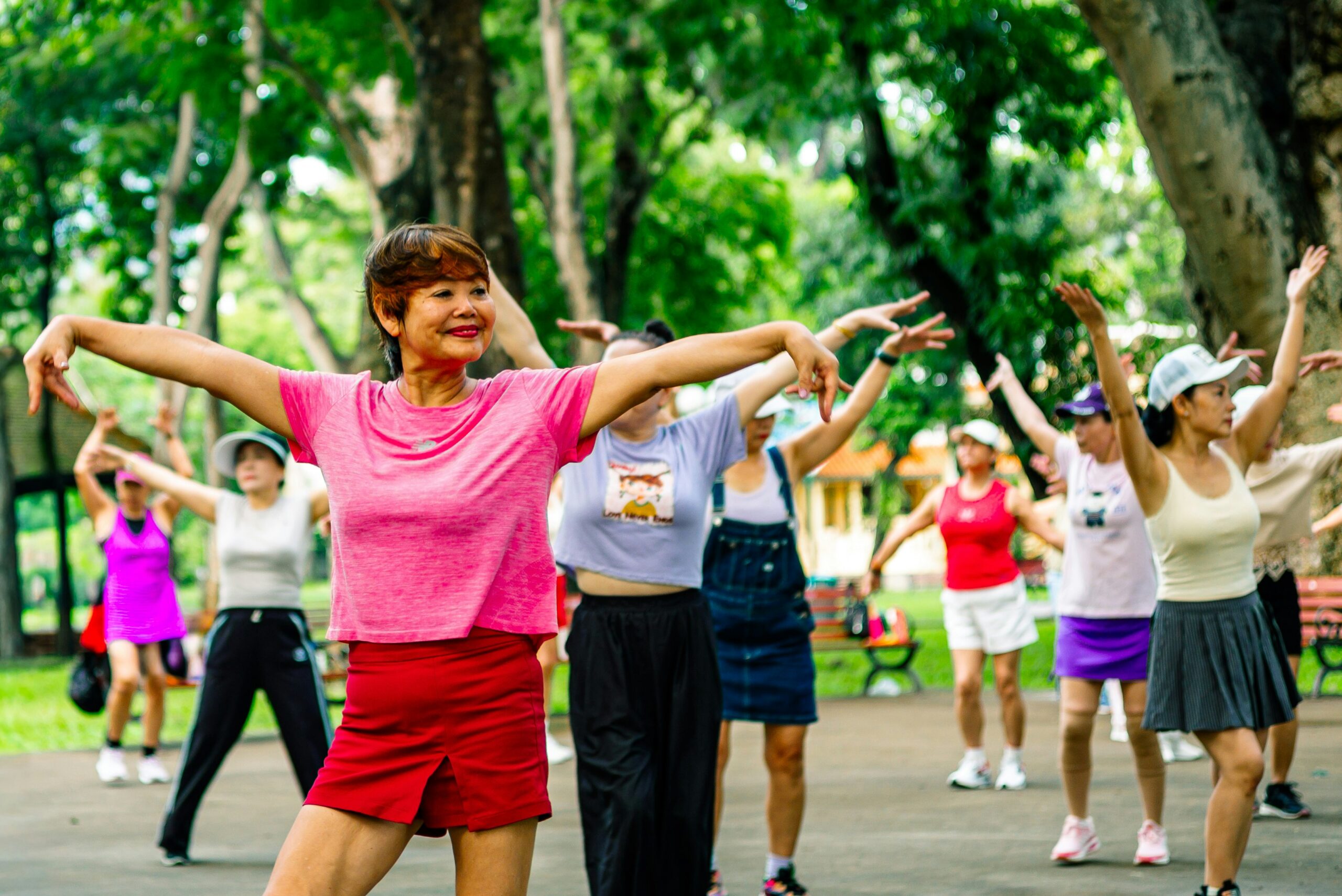
You don’t have “time” for health. You didn’t do it as a precious, lonely piece of cake. You let it get wild and messy in the middle of everything else – the after-dinner dance parties, weekend rides where you stop every five minutes to pick up odd rocks, the bike rides where you chase fireflies instead of counting the miles, the Sunday morning pancake that turns into a full-blown kitchen dance.
Health is not something you do alone, in silence, at 5 in the morning, before the world wakes up.
Table of Contents
1. The Weekend “Adventure Hike”
It doesn’t feel like a chore, or a checklist item, or something you should do because your Fitbit pings you at 6 p.m. It seems like a secret mission. As if you’ve been transported to a storybook where the map is drawn in dandelion fluff and the treasure isn’t gold, but a perfect spiral snail shell, or the unmistakable sound of a red-winged blackbird tucked in its tail. Your 5-year-old is now Captain Leaf-Explorer, holding a magnifying glass made from a plastic bottle cap, convinced she’s tracking a rare species of “sparkling moss.”
Your 8-year-old, usually glued to his tablet, suddenly becomes chief navigator, peering over his parka hood like a seasoned ranger and announcing, “We’re two minutes away from the cliff of destiny.” You’re just walking – but not really walking.
You stop bowing. Hold your breath as if a dragonfly is hovering a few inches from your nose. Let your child lead the way, even if it means stopping every six feet to check for a bug, or “rescue” a fallen leaf from the path like it’s a lost princess.
, Don’t rush. You don’t cover miles. You let the pace be set by your little feet, who have to kick every puddle, explore every crack in the bark and collect every pine cone that looks like a dinosaur egg. And in those breaks—when you all stand together, whispering over a trail of ants or throwing rocks over a dirty drain—the walls between you open. Here are the conversations that never happen at the dinner table:
“Mom, why are there wounds on the trees?” “Dad, do you think the moon gets lonely?” “Can we take the squirrel home
2. The Kitchen Dance Party
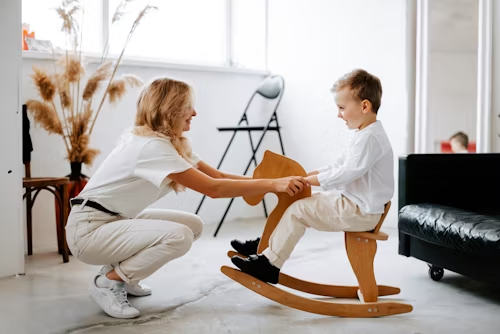
Who says the heart of the home can’t be the gym? Because let’s be real – the kitchen health is where the real magic happens. Not just in the sweet chaos of onions sauteing in oil or half-baked cookies cooling on the counter, but in the messy, unwritten, gloriously imperfect moments when the day finally unfolds and you realize: We’re all still here. still breathing. still together. And maybe… just maybe… we have to move on.
So you turn on the music.
It doesn’t matter if it’s “We Don’t Talk Anymore” playing from your teenager’s phone, or your child’s favorite Encanto song that you’ve listened to 47 times today, or that 90s rock song that your partner insists on playing every Tuesday night like it’s some sort of ritual. You press play. And then – you stop pretending. You stop wiping the counters. You stop looking at the clock. You drop the spatula. You left the skirt. You let your body do what it has been holding back all day.
And then – chaos.
You laugh so hard you can’t stand it – your stomach hurts, your heart pounds, your cheeks hurt – and you don’t care. You don’t exercise. You crack. You let go. You remember how good it feels to move without purpose, to be ridiculous without permission.
This lasts for five minutes. Maybe ten. The pasta is still cooking. The tools are still piled up. The dog barks on the roof. But for those few wild, shiny seconds, the kitchen is not
3. The “Obstacle Course” Health Challenge
Health nothing like the sound of a child’s happy squeals echoing through the house as they pull themselves up over the soft fort of the couch, only to fall belly-down like a human burrito into a pile of laundry—and then immediately jump up, eyes shining, screaming, “Again! Do it again!” It’s not just a game. It’s medicine. Pure, unfiltered, soul-satisfying medicine for the whole family.
You drag the hula hoops out of the garage, drape blankets over the chairs to create a tunnel that smells faintly of old pizza and dog hair, and tape a strip of masking tape to the floor like a “rope over the alligator ditch.” You don’t plan it. You don’t get time for that. You just start building – and then suddenly you’re involved. Your partner, who swore he wouldn’t “do that sort of thing”, hides under the carpet tunnel like a ninja, growling dramatically when he comes out. Your teenager, who usually scrolls through her phone like a lifeline, now catches you with her stopwatch, yelling, “You beat mom’s record!”
Do a ridiculous victory dance on the shore. And your child? They crawl backwards through the “tunnel”, laughing so hard they forget they’re supposed to run – and honestly? That’s the best part.
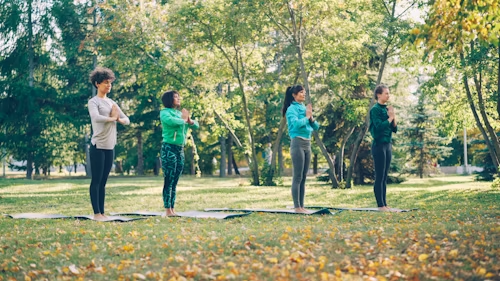
It’s not about speed. It’s not about winning. It’s about what happens when you fall.
When you slip on a “block” of pillows and land on your butt with a thud – and instead of pretending it didn’t happen, you laugh so hard you snore. When your child says with wide eyes, “Mommy, you’re so good at falling!” and T
4. The “Active Errand” Health Transformation
You know those chores—the ones that feel like checklists written in invisible ink, that drag you from the grocery store to the drugstore to the post office, while your toddler kicks up the seat and your oldest child silently mourns the loss of the weekend? Where you come home tired, not because you’ve worked hard, but because you sat for two hours straight, scrolling on your phone, mentally rehearsing what you’re going to say to your boss tomorrow, and wondering when was the last time you felt your breath?
Here’s the secret no one tells you: These tasks don’t have to be soul-crushing.
They can be the calmest, most beautiful kind of family rituals — if you decide to just go.
This is a scavenger hunt. Your 4-year-old becomes a “produce detective,” pointing out each bruised avocado as if it were a crime scene. Your 9-year-old, who usually complains about rides, now starts counting how many apples there are—”That’s five, Mom! That’s more than the number of planets!” – and you smile because you didn’t realize you stopped checking your email.
You carry your groceries home in a backpack, not because you’re trying to be heroic, but because the store is only a 10-minute walk away, and the sun is golden and low, and the air smells of cut grass and rain in the distance. Your child drags his feet and pretends to be a tired knight, and you pretend to be his trusty dragon and snore.
5. The Garden of Health Growth
Health is something sacred about getting your hands dirty.
Not the kind of dirt that means you forgot to shower before dinner—but the deep, earthy, fingernail-crusted kind of dirt that comes from kneeling on damp soil, pressing seeds into the ground like little lifts, and feeling the cold, crumbling weight of dirt between your fingers. This is not glamorous. There are no Instagram filters for this. No one posts before and after pictures of your tomato plants. But if you’ve ever stood in your garden—or even on a sunlit balcony with three pots of basil—and watched your baby’s face light up as a green sprout has just broken through the soil, you know: This is where health begins.
Gardening doesn’t feel like exercise. It feels like coming home.
You don’t “work out” when you dig. You breathe. Bending hurts your back, makes your knees dirty, carrying sacks of manure burns your shoulders – but your soul? This provides relief. Its rhythm – scoop, drop, pat – becomes a kind of meditation. Your child, who cannot sit still for even five minutes at the dinner table, suddenly becomes completely still, leaning on a sapling as if he were a sleeping baby. Your teenager, who hasn’t looked you in the eye all week, quietly gives you a trowel and says, “I’m going to plant cucumbers.” No big speech. Just action. And in that silence, something changes.
You plant tomatoes because you want them to taste sunshine. You plant basil because you remember your grandmother’s pesto. You plant lilies because your daughter insists they “magically keep bugs away.” And then – you wait. You give water, you check. you forget. You remember. You worry when it rains a lot. When the first flower blooms, you celebrate. And when the first ripe tomato hangs heavy on the vine, red and warmed by the sun, you don’t
6. The Sport-Sampling League
Let’s be honest—signing up for a soccer league or enrolling the kids in weekly swim lessons feels less like “health” and more like another item on a parent’s to-do list that costs $200, requires a 45-minute drive, and ends in a meltdown in the car because no one wants to wear a uniform. we’ve all been there. guilt. Exhaustion. The quiet dread of another Saturday morning spent on the sidelines, pretending to be happy while silently wishing you were back in bed.
So we stopped doing that.
Instead, we started with something quieter. something wrong. Something that didn’t require registration forms, sponsorship or matching jerseys.
We started a family league.
This is not the case with trophies. Not like the position. Just us—sweating, laughing, sometimes tripping over our own feet—trying a new way to move forward each month.
March was football. We didn’t have a goal so we used backpacks as poles. We had no judges, so the dog became the official “ball catcher”. We didn’t care who scored the goal – we cared who made the most ridiculous dive to stop the kick, and who ended up rolling in the grass like a starfish afterwards.
April was backyard badminton. We used a broken racket we found in the garage and a shuttlecock that kept flying as if it had a mind of its own. Your 7-year-old invented a rule: “If it hits the neighbour’s fence, you get a free cookie”. We played until the sun went down and your partner, who swore he wasn’t athletic, took a full spin to hit serve – screaming like he’d just won the World Cup.
May was track day at the local school. We were not racing against time. We had a race to see who could run the slowest while doing the worm. We ran a relay with water balloons. We let the child “run” as he pleases
7. The Post-Dinner “Power-Down” Walk
The time is 19:12. The dishes are half done, the dog is snoring on the kitchen floor, and your teenager is already reaching for the remote control like it’s a lifeline. You can feel the pull – the siren song to roll, flow, zone out. You’ve been running all day. You are so tired you just want to collapse.
But instead you say this.
“let’s go for a walk.”
No increase. No training. This is not a “family challenge”. Just… a trip.
Don’t make a big deal out of it. You don’t lecture. You just wear your shoes. Your partner looks up, sighs, but continues to tie the laces. Your child, who has been bouncing off the walls since noon, bites half of a banana—and then yells, “Come on?” Like you just promised a unicorn. Your oldest, still with his eyes fixed on the phone, mumbles, “Okay,” but sets it down on the counter. And then… you go outside.
The air is cold. The street lights just blink. The world feels softer now, as if the day has passed.
You don’t talk at first. You just go. slowly. Barely keeping pace. Your child runs forward, then backward, then forward again, chasing fireflies that haven’t even appeared yet. Your partner hums something strange. Your teenager walks next to you for the first time all day, hands in pockets, shoulders relaxed.
And then – quietly, almost casually – it begins.
“Tender?” Says the little one and pulls on the sleeve. “Do you think clouds have feelings?”
you stop. You look up. “I think maybe they do,” you say. “Sometimes they look very sad. And sometimes… they just float, like they’re dreaming.”
Your teenager, who hasn’t said more than three words since school, suddenly blurts out, “I think my science teacher hates me.”
You don’t react. You don’t fix it. You just keep going. “why do you say that?”
“I don’t know. I just feel like she doesn’t see me.”
8. Weaving a Tapestry of Well-Being
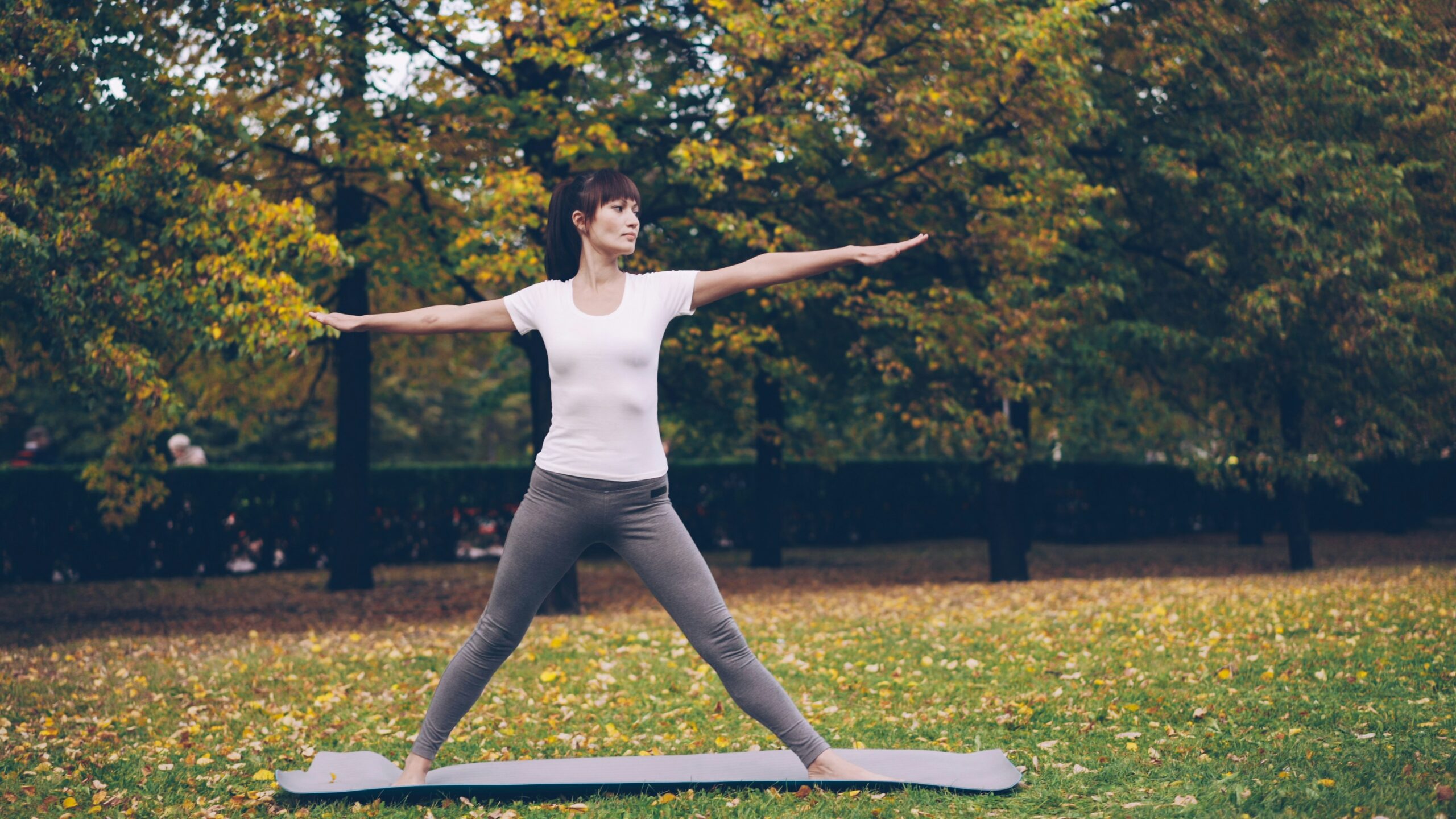
It’s not about adding one more thing to your already full plate. It’s not about tracking steps, forcing yourself to do a morning workout, or feeling guilty for missing “family workout time.” It’s not about perfection. This isn’t about Pinterest-worthy yoga sessions on the lawn or Instagram posts of your kids holding hands in the driveway.
It’s about being aware.
Notice that your oldest, who has been quiet all week, finally talks to you while you’re walking the dog in the evening—not because you asked, but because the rhythm of your steps gave his mind room to breathe.
You don’t train your family to be athletes. You teach them to survive.
Every time you turn the grocery store into a walking adventure, every time you turn your pillow fort into an obstacle course, every time you choose to jog under a street lamp instead of turning on the TV – you’re not just moving your body. You sew love into the fabric of your days. Without saying a word, you’re showing your kids that health isn’t something you can do alone at the gym with headphones on. It’s something you do together – barefoot in the grass, covered in flour, tripping over the dog, laughing until you cry.
You teach them that self-care isn’t selfish—it’s sacred.
Sweating isn’t a chore—it’s a celebration.
Stretching your body after a long day isn’t a chore—it’s a ritual of gentleness.
Getting dirty in the garden, chasing fireflies or racing each other to the mailbox is not “wasting time” – it is.
How can I get my kids excited about moving together instead of seeing it as a chore?
Start with play—not pressure. Turn walks into scavenger hunts, backyard time into obstacle courses, or bike rides into “mission-based” adventures (e.g., “Find the red mailbox!”). When movement feels like fun, not fitness, kids naturally engage—and you’ll find yourself getting fit without even noticing.
What if I don’t have time for long workouts with my family?
You don’t need hours—just consistency. Three 10-minute bursts a day count: a morning stretch-and-dance party, a post-dinner walk around the block, or a 7-minute bodyweight circuit while the kids “coach” you. Short, frequent, and joyful beats long, forced, and stressful.
How do I keep this going when life gets busy or chaotic?
Anchor your family fitness to existing routines—like brushing teeth, eating dinner, or waiting for the school bus. Make it non-negotiable but flexible: “We move together before we unwind.” On wild days, even one minute of jumping jacks or a silly dance in the kitchen counts. Progress, not perfection, keeps it alive.