







Health 4 Critical Checks That Prevent Big Problems Before They Start
We live in a world that never stops demanding more – more productivity, more presence, more action. Between back-to-back meetings, school pickups, late-night scrolling and endless pinging of notifications, it’s no surprise that our health slips to the bottom of the list. We say “I’ll start eating better next week”. “I’ll call the doctor when things calm down.”
But here’s the sobering truth: Your health doesn’t depend on your to-do list. It does not wait for the “right time”. It’s the soothing foundation behind everything you love—the ability to laugh with your kids, walk without pain, show up for your partner, or even just enjoy a cold cup of coffee without feeling tired. Ignoring it is not being busy. It’s borrowing from a future version of yourself who won’t have the energy to thank you.
It’s okay to feel uncomfortable checking your health. We’ve all been there – afraid of the scale, avoiding the doctor because we “know” we should be doing better, or afraid of what the tests will reveal. But the thing is: most of the time, the real fear is not the diagnosis. It is this thought that you must change. You will be asked to give up something you like.
But preventive care is not about punishment. It’s about safety. It’s about catching a small blip on the radar before it becomes a storm. A simple blood test. Conversation about sleep. A blood pressure check. This is not a sign that you are wrong – this is a sign that you are paying attention. And that’s the bravest thing you can do.
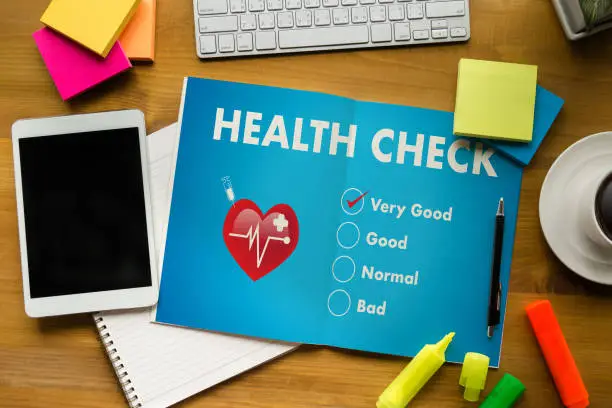
These four routine tests are not reserved for people who are “already ill”. They are for everyone who wants to live life to the full, freely and without surprises. They are the body’s early warning system, which whispers before it screams. Fulfilling them is not an admission of weakness. it is an action of Health.
Table of Contents
Check #1: The Numbers That Tell Your Story
When the pressure stays too high for too long, it’s like sending a constant stream of speeding trucks down quiet neighborhood streets. The loss is not sudden. It happens slowly, quietly – cracks in the pavement, worn railings – until one day something happens. And here’s the disturbing truth: You can feel perfectly fine when this happens. High blood pressure rarely comes with headaches or warning signs. It’s called “the silent killer” because it can go unnoticed for years, silently weakening your heart and hardening your arteries. But check it? It’s the easiest thing in the world – a quick squeeze on the arm, it’s over in a minute. no pain. no play. Just one number that can change everything.
Then there’s cholesterol—not the villain we’ve been taught to fear, but more of a distribution system in the blood. Some trucks work well; Others cause deadlocks. LDL is “nasty” – it clumps cholesterol along your artery walls, where it sticks and deposits like rust on the pipes. Over time, these deposits harden into plaque, narrowing your highways and making it harder for blood to flow.
HDL, on the other hand, is the cleanup team. It moves forward, picks up the excess and takes it back to the lever to break it down. A simple blood test – usually after going without food for a few hours – tells you how these two forces balance. It’s not about banning cholesterol. It’s about keeping bad traffic down and cleaning crews strong.
The beautiful part? You are not powerless here. Knowing your number before the injury happens is one of the greatest gifts you can give yourself.
Check #2: The Mighty Regulator: The Blood Sugar Check
Think of your body as a house, and glucose – sugar obtained from your food – is the electricity that powers everything. Insulin is the key that turns on the lights in every room. But over time, if too much current continues to flow and the locks start to stick, the keys may no longer work. This is insulin resistance: Your cells stop listening to insulin, so your pancreas has to work overtime, turning the key more often and harder. You may not feel anything.
No fatigue, no warning signs – just a slow, silent shutdown of the system. The HbA1c test doesn’t just measure a number. It’s a cool report that shows how your body has handled that energy over the weeks and months. And if the grades drop? It is not a failure. It’s a gentle nudge from your body that says, hey – I need your help.
Most of us don’t realize how silently diabetes creeps up. By the time the symptoms appear – extreme thirst, blurred vision, persistent fatigue – the damage is already done. High blood sugar doesn’t just make you feel depressed; It’s like a slow-acting acid that flows through your veins and eats away at the tiny blood vessels in your eyes, kidneys and nerves.
This is why people with uncontrolled diabetes lose their sight, feeling in their legs and even their kidneys. But here’s the rub: This path is not inevitable. Pre-diabetes is not a life sentence. This is a pause button. A moment when your body screams, change something – before it’s too late. And the beautiful part? You can hit the pause button yourself – with food that nourishes, movement that energizes and rest that restores.
Check #3: The Unspoken Check: The Mental and Emotional Health Check
Your mind is not only up; It’s in every heartbeat, every stomach ache, every sleepless night. When you are anxious, your shoulders tighten. When you grieve, your immune system stumbles. When you become tired from constant stress, your blood pressure rises and your appetite disappears. Your brain is not a separate system – it is the conductor of your entire orchestra. And if the conductor is overwhelmed, the whole performance falls apart. Examining your mental health is no easy task. This is important – like a persistent cough or a strange rash. It’s not about being “happy” all the time. It’s about asking: Am I still me?
Therapy isn’t just for “broken” people. Support groups are not a last resort. Talking to a professional isn’t a sign that you’ve failed—it’s proof that you’re still fighting. These are not luxury treatments. They do maintenance. Just like you fix your car before it breaks down, you can and should take care of your inner world before that.
Check #4: The Targeted Checks: Age and Gender-Specific Screenings
Your body at 25 isn’t the same as it was at 45 or 65—and your health needs shouldn’t be the same. These displays are not warnings that something is wrong. They do calm, thoughtful check-ins, like asking a friend, how are you? For women, the pap smear or the HPV test is not about fear – it’s about foresight. It’s a simple swab that picks up changes in the cervix very early, before they become anything serious, turning what could have been a life-changing diagnosis into a small, treatable glance.
And mammography? This is not an attack. This is the gift of time. Finding a small, hidden tumor before it spreads means you get to keep your life as you know it – no chemotherapy, no mastectomy, just treatment, on your terms. These are not tests for “someone else”. They are your tools, to keep you whole here and responsible for your story.
For men, a PSA or prostate test doesn’t mean you’re sick – it just means you’re paying attention. Prostate cancer often grows slowly, silently and without giving any symptoms until it is too late. But catch it early? This is the difference between a quick process and a long battle.
And for everyone else, colonoscopy isn’t just a daunting prep and scope—it’s a silent guardian. It finds the small, harmless polyps and removes them with a gentle touch before they have a chance to become dangerous. You don’t wait for the pain to activate. You stop it. You don’t hope for luck – you choose caution. These views are not about aging. They are about to be present in your life for decades to come.
These are not one-off events. They are part of your lifelong rhythm, like brushing your teeth or getting your car serviced. They are not about to be “at risk”. They are about being responsible – for your body, your family, your future. you don’t have to wait.
Your Health, Your Responsibility
Your health doesn’t just belong to you—it’s the quiet, daily work of the person who carries you through every sunrise, every laugh, every hard day. It’s the canvas on which your life unfolds: walks with your dog, hugs that last longer than a second, quiet mornings with coffee and no crowds.
No one else can do this for you. You are not a patient waiting to be healed – you are the CEO of your own well-being. And these four checks? They’re not medical boxes to stick in. They gently check in with the person who’s been there for you all along: you. A blood pressure measurement. A blood sugar reading. Conversation about how you sleep. These are not scary – they are sacred. They are proof that you haven’t given up on yourself.
Fear tells you to wait. Busyness asks you to leave it. Nostalgia whispers, that’s probably fine. But what if the “fix” is just a quiet, slow erosion of your beloved life?Call the office. Write your questions. Say: “I don’t know what to ask, but I want to understand.” Your doctor is not a judge – they are a guide standing next to you, not across the room. And the most powerful thing you can say is: I really care about finding out.
It’s not about being healthy for others. It’s about being healthy for you – because the version of you that still wants to be curious will walk without stiffness and feel at ease in your own skin. Your future self is already thanking you—not with words, but with the quiet ease of a body that remembers how to breathe, a mind that remains still.
Why should I get a blood pressure check if I feel fine?
High blood pressure often has no symptoms—but it silently damages your heart, kidneys, and arteries. A simple check can catch it early, before it leads to stroke or heart disease.
Do I really need a blood sugar test if I’m not diabetic?
Yes. Prediabetes often shows no signs, but catching elevated blood sugar early lets you reverse it with diet, movement, and lifestyle changes—before it becomes Type 2 diabetes.
Is a colonoscopy necessary if I have no symptoms?
Absolutely. Colonoscopies don’t just detect cancer—they prevent it. Polyps can be removed during the procedure, stopping cancer before it starts. Starting at 45 is recommended, even if you feel perfectly healthy.